Exploring the Versatility of the Match Game Food by Name Worksheet 1
Understanding the Core Design and Purpose
The Match Game Food by Name Worksheet 1 is a dynamic visual tool designed to enhance recognition and categorization of food items. Built with flexibility in mind, it serves as a foundational resource for a wide range of applications, from early childhood education to creative design projects. The downloadable package includes an AI file, a JPEG file, and a PNG file, allowing users to adapt the content across both digital and print formats.
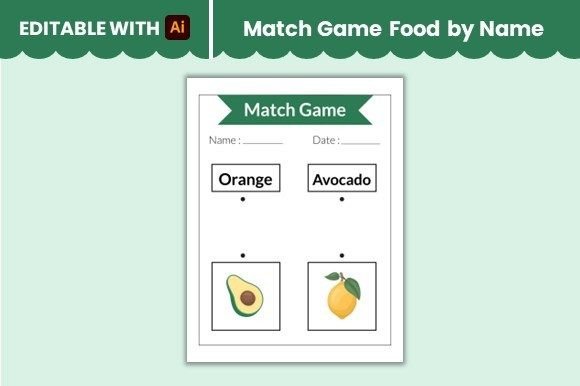
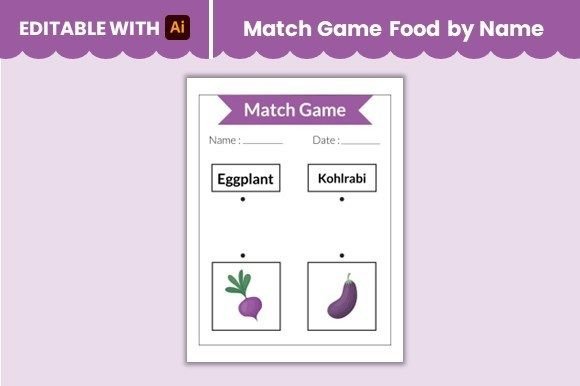
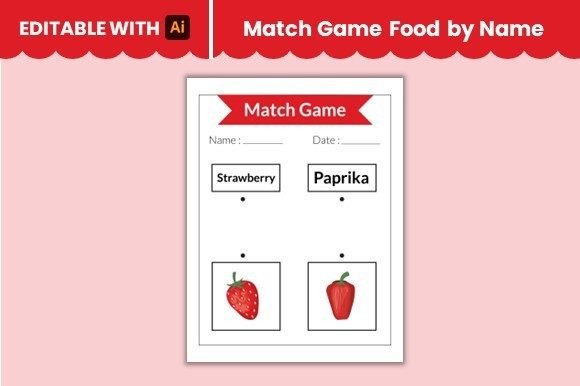
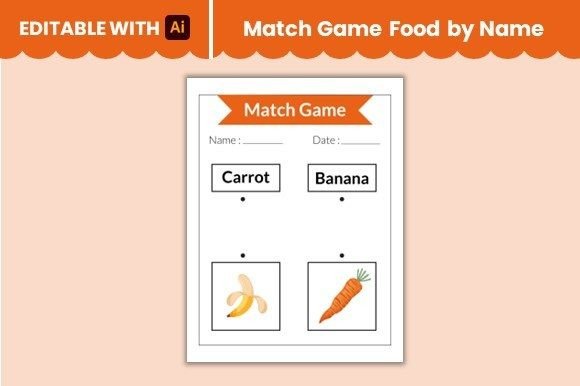
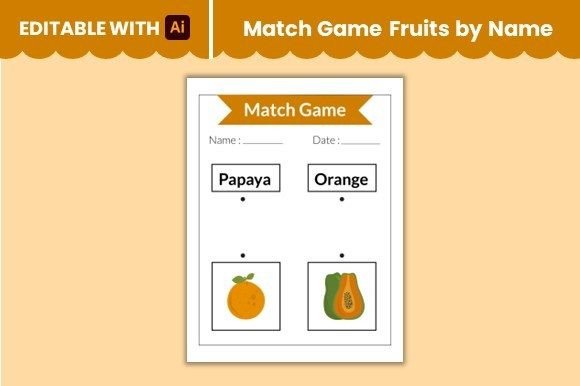
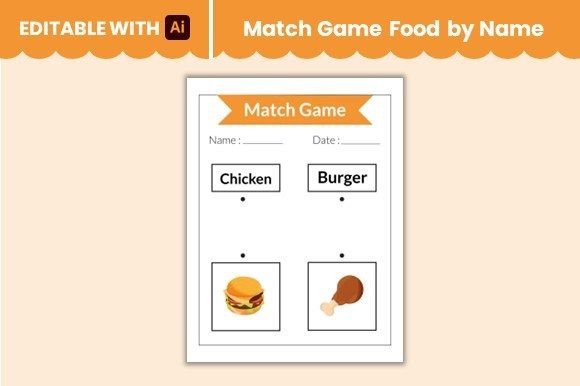
At its core, the worksheet presents a series of food-related images paired with corresponding names, encouraging users to visually and cognitively connect the two. This simple yet effective design supports learning through association, a key principle in memory retention and language development. Whether used in a classroom setting or as part of a personal project, the structure of the worksheet promotes engagement and interaction.
Applications Across Different Fields
One of the most compelling aspects of the Match Game Food by Name Worksheet 1 is its adaptability. Educators can integrate it into lesson plans to reinforce vocabulary and visual discrimination skills. For instance, in a preschool or kindergarten class, teachers might use the worksheet to help students identify fruits, vegetables, grains, and proteins, laying the groundwork for healthy eating habits and basic literacy.
Outside of formal education, the worksheet's design lends itself well to creative industries. Graphic designers and illustrators can repurpose the images as part of larger projects such as picture books, infographics, or digital illustrations. The availability of multiple file formats ensures that users can scale and modify the content without compromising quality.
- Sticker creation: Print the images as stickers for use in activity books or reward charts.
- Picture books: Incorporate the visuals into custom storybooks that teach children about food groups or meal preparation.
- Interactive learning tools: Use the worksheet as a base for flashcards or matching games that support language acquisition and cognitive development.
Advantages of Using the Worksheet Format
The worksheet format offers several distinct advantages over more complex educational tools. First, it provides a clear and uncluttered interface that minimizes distractions and keeps the focus on the learning objective. This simplicity makes it especially effective for younger learners or individuals with attention-related challenges.
Second, because the Match Game Food by Name Worksheet 1 is available in editable AI format, it allows for customization. Users can modify colors, labels, and layout to suit specific needs or preferences. For example, a nutritionist might adjust the worksheet to emphasize certain food categories, while a parent might add personal photos to make the activity more relatable for their child.
Third, the worksheet supports multiple modes of interaction. It can be printed and used with physical tools like markers and magnets, or integrated into digital platforms where users can drag and drop items into matching pairs. This versatility enhances its usability across different environments and learning styles.
Real-World Use Cases and Practical Examples
Consider a small business owner launching a line of educational children’s products. The Match Game Food by Name Worksheet 1 could serve as a prototype for a new sticker collection or a downloadable resource for parents. By offering both high-resolution JPEG and PNG files, the owner can ensure that the images are suitable for both print and web use, expanding the reach of their offerings.
Similarly, a homeschooling parent might use the worksheet to create a themed unit on nutrition. They could print the images on cardstock, laminate them, and turn them into reusable matching cards. Adding a tactile element like Velcro dots or magnets can transform the worksheet into a hands-on learning tool that keeps children engaged.
In a professional setting, such as a speech therapy clinic, the worksheet can be used to build vocabulary and improve articulation. Therapists might ask clients to name each food item aloud as they match it, reinforcing both visual and verbal skills. The clear, labeled images make this process straightforward and effective.
Technical Considerations and File Options
Each version of the Match Game Food by Name Worksheet 1 serves a unique purpose:
- AI File: Ideal for designers who need full editing capabilities. Vector-based, it allows for resizing without loss of quality.
- JPEG File: Best for high-quality images that don’t require editing. Suitable for printing and digital sharing.
- PNG File: Offers transparency and sharp detail, making it perfect for overlays, web graphics, and presentations.
These file types ensure that the worksheet can be integrated into a wide variety of workflows. Whether you're preparing materials for a classroom, designing a digital app, or creating marketing assets, the Match Game Food by Name Worksheet 1 gives you the tools you need to work efficiently and effectively.
Designing for Engagement and Accessibility
A key factor in the worksheet’s success is its accessibility. The images are designed with clarity and simplicity in mind, making them easy to understand for users of all ages and abilities. The use of consistent visual cues—such as uniform image size, clean backgrounds, and clearly labeled text—enhances usability and reduces cognitive load.
Moreover, the worksheet supports inclusive learning. For children with developmental delays or learning differences, the act of matching pictures to words can be a powerful way to build confidence and improve focus. The worksheet’s visual structure also supports bilingual learners, who can benefit from pairing images with words in multiple languages.
Customization Tips for Maximum Impact
To get the most out of the Match Game Food by Name Worksheet 1, consider the following customization strategies:
- Add context: Integrate food images into themed lessons or activities (e.g., “Fruits of the World” or “Healthy Breakfast Choices”).
- Personalize content: Replace generic images with photos of foods from a child’s own culture or diet for more meaningful engagement.
- Create interactive versions: Use digital tools to build drag-and-drop games or flashcards that can be used on tablets or computers.
These modifications not only extend the worksheet’s usefulness but also allow users to tailor it to their specific goals and audiences. Whether you're a teacher, parent, designer, or entrepreneur, the ability to customize the worksheet enhances its value and relevance.
Conclusion: A Flexible Tool for Diverse Needs
The Match Game Food by Name Worksheet 1 is more than just a matching exercise—it's a multifunctional resource that supports learning, creativity, and communication. Its thoughtful design, combined with the flexibility of multiple file formats, makes it a valuable asset across a wide range of fields and applications.
From early childhood education to digital design, the worksheet adapts to meet the needs of diverse users. It encourages engagement through visual learning, promotes vocabulary development, and offers a platform for customization and innovation. Whether used as a standalone activity or integrated into larger projects, the Match Game Food by Name Worksheet 1 delivers practical benefits that extend far beyond the page.